

It’s been an interesting few years working in and around the data center industry, and no event captures the momentum, energy, and growth more than Data Center World. The conference is a great opportunity to get a “heat check” on the current challenges facing the industry. This year’s theme was “Innovation at Scale,” and if the sessions we sat through are any indication, the industry has a pretty good handle on how to scale the infrastructure — it's the human side of that equation where I think we're still catching up.
Here’s a Quick Snapshot of That Scaling:
1. This year, the average new data center is 80 megawatts; last year, it was 30.
2. Data centers are on track to consume 10% of all US electricity by 2030. The entire state of California runs on 50 gigawatts. The industry needs 200 gigawatts of new capacity over the next 4.5 years.
3. In 1998, the average Microsoft data center rack was 1 kilowatt. Today, we’re talking 1-megawatt racks. That's a 1,000x increase in about 25 years.
4. More capacity was put under contract in 2026 alone than in all previous years combined.
5. One gigawatt of data center capacity requires tens of thousands of construction workers to build, and hundreds of people to run it.
The Big Constraints Facing the Data Center Industry
The constraints everyone's talking about, and the one nobody's quite treating seriously enough.
Most headlines, including many of the sessions last week, covered the key bottlenecks that will slow and delay the scale of AI: water, energy, land, and community engagement. This is appropriate given that grid queues, permitting timelines, and cooling water are all big constraints to the future of both industries. A lot of capital and engineering talent have been thrown at solving these constraints, though the pace never quite keeps up with demand.
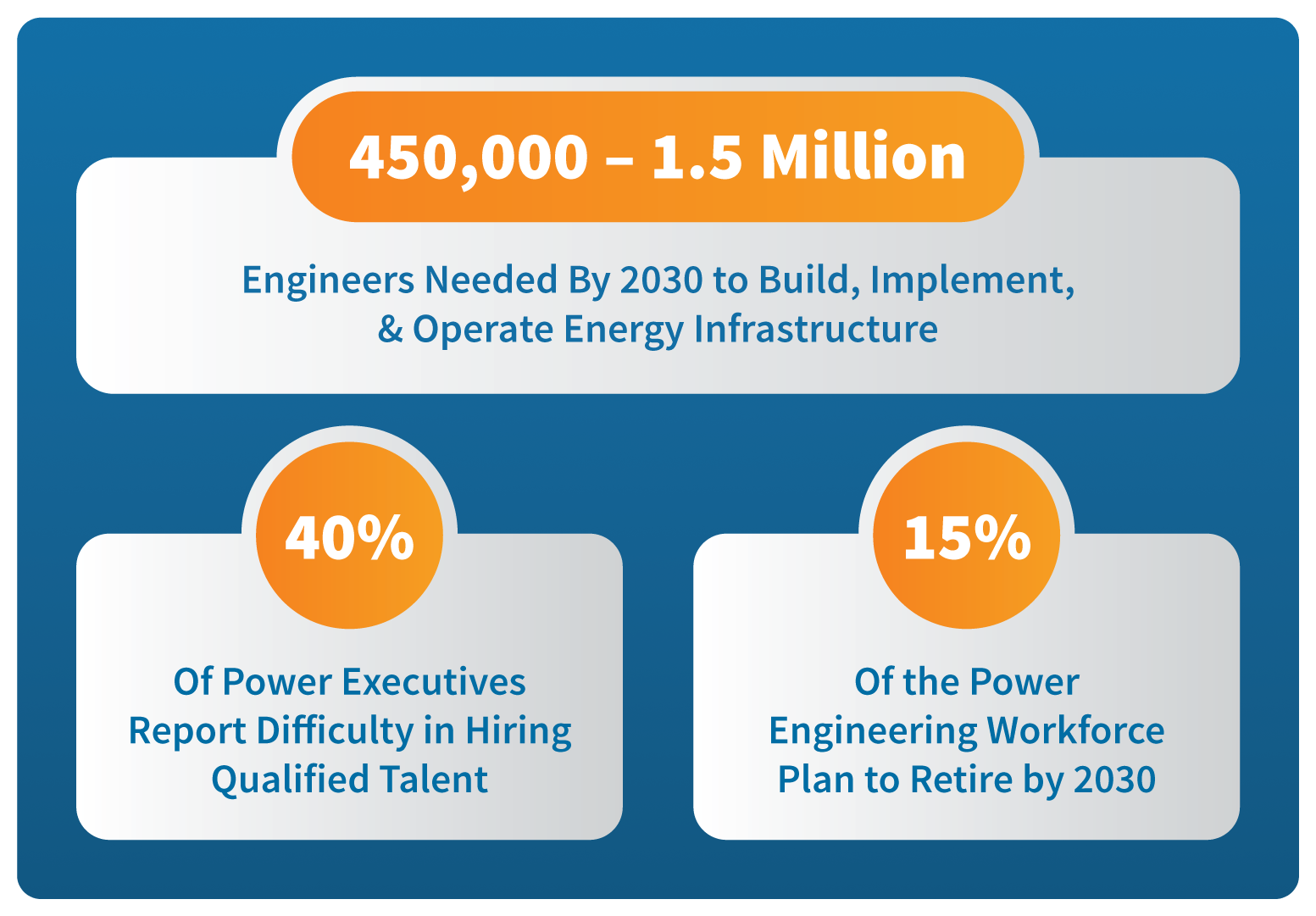
For the first time last week, we started hearing workforce challenges mentioned in the same breath as power and water. More panels are naming it, more slides are quantifying it. And as the above numbers show, people are starting to realize just how much of a constraint this workforce issue can become for the entire AI supply chain, from power generation, through construction, and into data center operations.
But there's a meaningful difference between acknowledging that something is a constraint and actually treating it like one. Scaling takes time.
Labor should be treated as a capital investment, not just an operational expense.
Put simply, the same discipline going into these 20-year power agreements, into modular construction strategies, into liquid cooling stuff that I admittedly don’t fully understand — that same forward-looking investment logic needs to be applied to workforce development. As an industry, we probably shouldn't wait until a project is permitted and a shovel is in the ground to start building the talent pipeline that's going to staff it.
This is the problem I’m most excited to continue solving. Through Brooksource’s Elevate program, we’re partnering with local community colleges, hyperscalers, and utility providers to Power Systems Engineers and Data Center Talent Accelerator (DCTA) programs.
Programs like these will help scale local talent to respond to and invest in the industry's growth. However, more needs to be done. The facilities that come online fastest in 2027 and 2028 will be those whose operators began building the pipeline before the shovel was in the ground.
Another Unspoken Constraint: The Neglected Stakeholders
The community piece was and remains on the back of everyone’s mind.
Protesters showed up outside the convention center. This didn’t come as a surprise, given the change in public opinion on data centers experienced over 2025 and into early 2026. Data centers and the industry's growth have broken through into the political limelight. My parents, friends, and other people in my life who are well removed from the industry have started asking me about data centers. The industry can no longer rely on staying in the dark.
On the one hand, communities that are pushing back on data center development are sometimes opposing projects that would bring real jobs, real tax revenue, and real grid investment to their area. In Loudoun County, VA, home to the earliest data center boom, data centers alone are expected to generate roughly $1.3 billion in tax revenue for the local government’s 2027 budget. Examples like this make data center moratoriums seem like a huge loss.
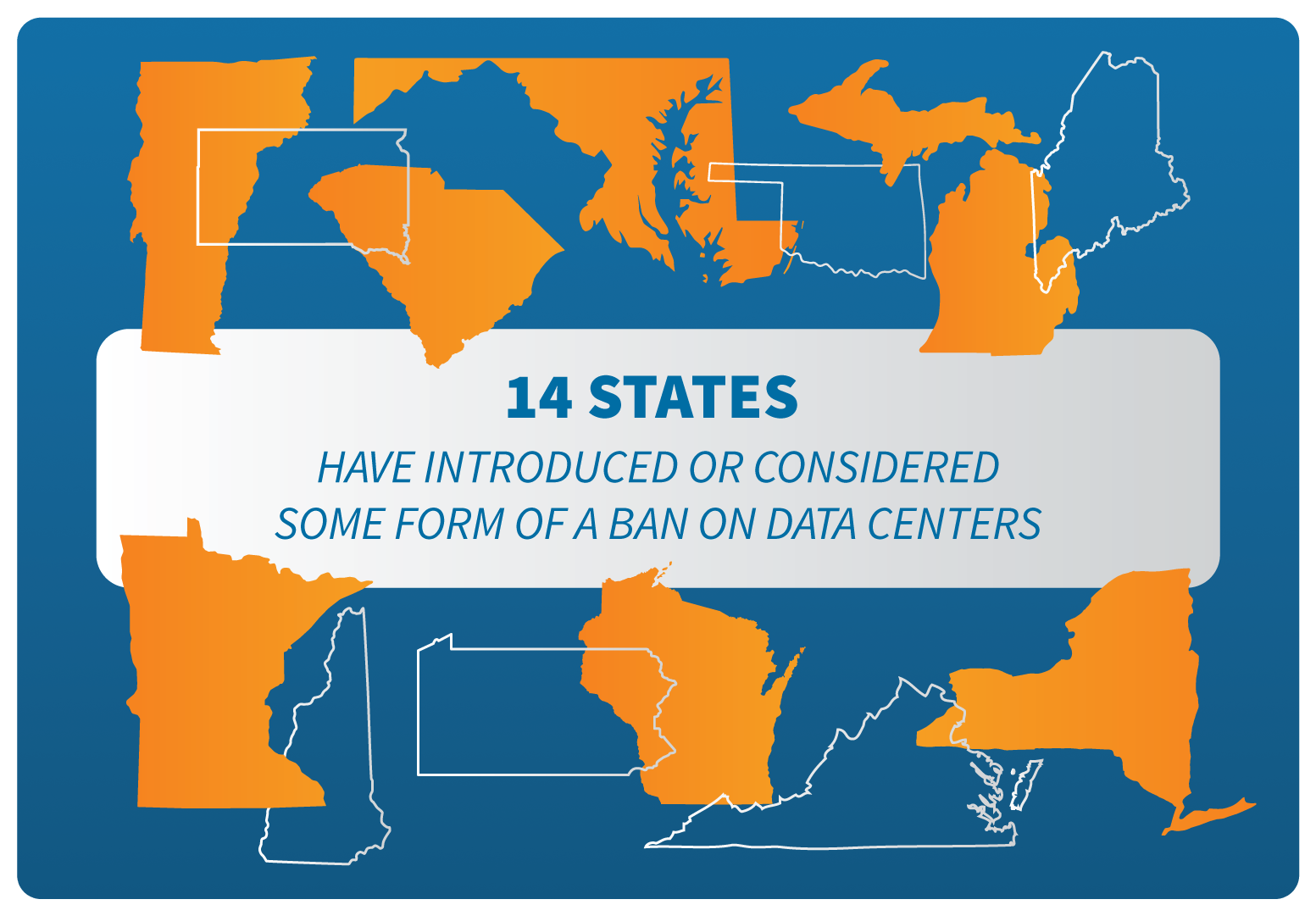
On the other hand, some of those community concerns are legitimate: zoning impacts, water use, noise, and grid load on local infrastructure. And if the industry's response is essentially "you don't understand how small our water footprint is compared to a golf course," that misses the point on engagement and relationship building, even if it’s true. It also helps explain why we’ve seen a rise in pushes to limit or halt data centers altogether.
Historically, the industry has operated on the basis of what one conference speaker described as the "well-kept secret approach" — not explaining itself, not engaging early, not making the affirmative case for what it does for a place. Those days are long gone. Loudoun County, the data center capital of the world, even shifted its view on the new construction of data centers when it eliminated its “by-right zoning” for data centers in March 2025. It’s clear that the industry will have to continue adapting its approach.
What Does the Future Look Like?
I may have the timeline and urgency wrong. Maybe the labor market adjusts faster than I'm giving it credit for, or maybe Moore’s law makes computing with fewer resources more feasible. The growing community relations problems might just sort themselves out as more facilities get built and people see the actual impact.
However, with nearly half of the US data centers planned for 2026 already delayed or canceled altogether, the industry already has enough constraints to manage. Regardless, waiting on these maybes to play out is the last thing we should be doing as an industry.